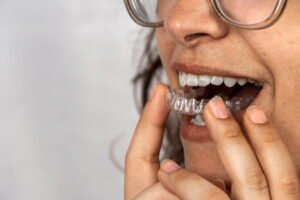
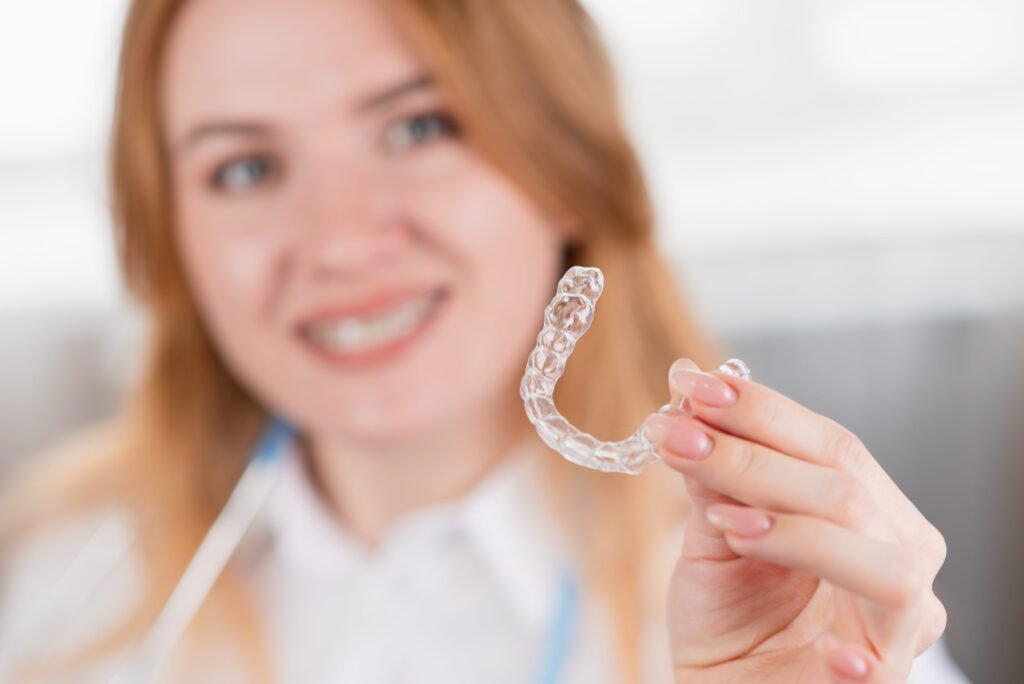
If your Invisalign aligner does not fit properly, reseat it firmly with chewies, wear it 23 to 24 hours a day, and if a visible gap remains after a few days, go back to your previous tray and contact your dentist for guidance.
Key takeaways
- A little tightness is normal, but visible gaps, rocking, or air pockets mean the tray is not fitting.
- Reseat gently with chewies and keep wear time at 23 to 24 hours a day.
- Never force a tray or bite hard objects to make it fit.
- If a gap persists after a few days, return to your last tray and call your dentist.
- Consistent wear and regular check-ins prevent most fit problems.
Quick Answer: What to Do When Your Invisalign Aligner Does Not Fit
If your Invisalign aligner does not fit properly, do not panic and do not force it. Reseat the tray by biting gently on chewies, keep wearing it 23 to 24 hours a day, and give your teeth a few days to catch up. If a visible gap or looseness remains, go back to your previous tray and reach out to Mantena Dental & Implant Center for guidance.
The short, step-by-step response
- Reseat the aligner firmly using chewies.
- Confirm you are wearing it 23 to 24 hours daily.
- Check for gaps by looking in a mirror.
- Return to your last well-fitting tray if the new one will not seat.
- Call your dentist if the problem continues.
When it is normal vs. when to call your dentist
Some pressure or snugness during the first few days of a new tray is completely normal. That feeling means your aligner is doing its job. What is not normal is a clear space between the tray and the tops of your teeth, a tray that rocks, or one that lifts off on one side. If these signs last more than a few days, it is time to call. Dr. Rakesh Mantena often reminds patients that early communication prevents small tracking problems from becoming larger ones.
How to Tell Your Aligner Truly Does Not Fit
You can tell your aligner does not fit when there is a visible gap at the biting edges, the tray rocks or slides, or you notice air pockets over the front teeth. A properly seated tray hugs each tooth closely with no daylight showing through.
Signs of a poor fit (gaps, rocking, air pockets)
- A space between the top edge of the tray and the edge of your tooth.
- The aligner rocks or spins when seated.
- Bubbles or air pockets visible against the front teeth.
- One side lifts while the other stays down.
What a snug fit should feel like
A snug tray feels firm and closely wrapped around every tooth. You may feel gentle pressure, but the plastic should sit flush along the edges with no lifting. Once seated, it should stay in place without slipping.
The difference between tightness and non-tracking
Tightness means the tray is working and applying planned pressure, which usually eases within a couple of days. Non-tracking means your teeth have not moved into the shape the tray expects, leaving visible gaps that do not close. Tightness is expected. Persistent gaps are the warning sign.
Why Invisalign Aligners Stop Fitting Properly
Invisalign aligners usually stop fitting because they were not worn enough hours, the wearer switched trays too soon, the teeth fell behind the plan, or a tray was damaged or lost. Missing attachments can also cause a poor fit.
Not wearing aligners enough hours per day
The most common reason is simply not enough wear time. Aligners are designed for 23 to 24 hours of daily wear. Falling short slows tooth movement, so the next tray no longer matches where your teeth actually are.
Switching to a new tray too soon
Moving ahead before your teeth are ready can leave the new tray unable to seat. Each stage builds on the last, so a rushed switch often shows up as a gap.
Teeth not tracking with the treatment plan
Sometimes teeth move a little slower than expected. When they lag, the plastic no longer conforms to them, and you see space at the edges.
Damaged, warped, or lost trays
A cracked, warped, or misplaced tray will never fit right. Heat can distort the plastic, and a lost tray leaves a gap in your progression.
Missing or dislodged attachments
Small tooth-colored attachments help the tray grip and guide movement. If one pops off, the aligner loses part of its hold and the fit changes.
Step-by-Step: What to Do Right Now
Reseat the aligner with chewies
Place the tray, then bite gently and evenly on chewies for several minutes, working around your whole mouth. This helps close small air pockets and seat the plastic fully.
Go back to your previous tray if needed
If the current tray will not seat, return to the last one that fit well. It keeps your teeth stable while you sort out the issue.
Increase daily wear time
Confirm you are wearing the tray 23 to 24 hours a day. More consistent wear often helps a snug tray settle in over a few days.
Track your progress and document the gap
Take clear photos of the gap in good lighting. These images help your dentist see exactly what is happening.
Contact your dentist
If the gap does not improve, call Mantena Dental & Implant Center. Our team will review your situation and advise the next step.
A note from Dr. Rakesh Mantena
“Most fit issues I see come down to wear time. When patients stay close to 23 to 24 hours a day and reseat with chewies, their trays track beautifully and stay on schedule.”
Can You Force an Aligner to Fit Again?
No, you should never force an aligner to fit. Forcing can crack the tray, irritate your gums, or shift teeth in unplanned ways. Gentle, even seating is always safer and more effective.
Why forcing is not the solution
Biting down hard or using objects to jam a tray in place can damage both the plastic and your teeth. A tray that needs force is telling you the teeth are not ready, and pushing harder will not change that.
Safe reseating techniques
- Seat the tray with steady finger pressure first.
- Bite gently and evenly on chewies across your whole mouth.
- Repeat in short sessions rather than one long, forceful push.
Use these
- Chewies for gentle, even seating
- Light finger pressure to place the tray
- Your previous tray if the new one will not seat
- Photos to document any gaps
Avoid these
- Forcing or jamming the tray
- Biting hard objects to push it down
- Skipping wear hours
- Ignoring a gap that lasts several days
Can You Switch Trays Early or Late?
You can sometimes adjust your tray schedule, but only with your dentist’s guidance. Switching too early can cause a poor fit, while extending a tray a little longer is often used to let slower teeth catch up.
Moving to the next tray too early
Jumping ahead before your teeth are ready is a frequent cause of gaps. The new tray simply cannot conform to teeth that have not finished moving, so it lifts at the edges.
Extending wear on a current tray
Wearing your current tray for a few extra days can give lagging teeth time to reach the target shape. This is a common, safe adjustment when recommended by your dentist.
How Your Dentist Fixes a Poor Fit
Your dentist fixes a poor fit with refinement trays, updated impressions, or a revised plan, depending on how far off the tracking is. Professional monitoring guides which option is best.
Refinement trays and mid-course corrections
Refinement trays are extra aligners made to close small gaps between where your teeth are and where they should be. They are a normal part of many treatments and gently bring everything back on track.
New impressions and updated treatment plans
If teeth have drifted well off plan, fresh impressions or scans let your dentist build an updated set of trays that match your mouth exactly.
The role of professional monitoring
Regular visits let Dr. Rakesh Mantena check attachments, review fit, and adjust the plan before a small issue becomes a bigger one. Consistent monitoring keeps your smile moving in the right direction.
When to See a Dentist in El Dorado Hills, CA
See a dentist in El Dorado Hills, CA if a gap persists for more than a few days, an attachment falls off, or a tray is lost or damaged. These are signs your treatment may need a professional adjustment.
Warning signs you should not ignore
- A gap that does not close after several days of full wear.
- A tray that rocks, lifts, or will not seat at all.
- An attachment that has come off.
- A cracked, warped, or missing tray.
How our team supports your clear aligner treatment
Our team at Mantena Dental & Implant Center reviews your fit, checks your attachments, and adjusts your plan as needed to keep you comfortable and on schedule. To schedule a visit with Dr. Rakesh Mantena, call (916) 939-6777.
Find us
Visit Mantena Dental & Implant Center in El Dorado Hills, CA, or call (916) 939-6777 to schedule a visit with Dr. Rakesh Mantena. For directions, use the helpful Google Maps or get step-by-step navigation through Get Directions.
Meet Dr. Rakesh Mantena
Dr. Rakesh Mantena is the lead dentist at Mantena Dental & Implant Center in El Dorado Hills, bringing extensive experience in preventive, restorative, cosmetic, surgical, periodontal, sedation, and implant dentistry. A graduate of the USC School of Dentistry, Dr. Mantena has also practiced internationally in the United Kingdom and India, giving him a broad clinical perspective.
With a strong focus on dental implants and restorative care, Dr. Mantena has completed hundreds of implant placements and restorations. He continually advances his skills through specialized training, including programs with the PIKOS Institute, Full Arch Masters Fellowship, and Urban Regeneration Institute in Budapest.
Known for his patient-centered approach, Dr. Mantena focuses on clear communication, comfort, and personalized treatment plans that help patients restore their oral health, function, and confidence. Outside the office, he enjoys spending time with his wife, two daughters, and his dog, Oreo, along with reading and exploring new developments in technology.
First, reseat the aligner by biting gently on chewies and make sure you are wearing it 23 to 24 hours a day. Look in a mirror to check for gaps at the biting edges. If the tray still will not seat after a few days, go back to your previous tray and contact Mantena Dental & Implant Center so the team can review your fit and advise the next step.
No, you should never force an aligner into place. Forcing can crack the tray, irritate your gums, and move teeth in unplanned ways. Instead, seat it with gentle finger pressure and bite evenly on chewies across your whole mouth. If it still will not seat, the teeth are likely not ready, and you should call your dentist for guidance rather than pushing harder.
You should only change your schedule with your dentist’s approval. Switching to the next tray too early is a common cause of a poor fit, because the new tray cannot conform to teeth that have not finished moving yet. If you feel ready to advance, ask Dr. Rakesh Mantena first so your progress stays on track and your trays continue to fit well.
There is no single fixed failure rate, because outcomes depend largely on consistent wear and monitoring. Research shows that success is closely tied to wearing trays the recommended hours, proper attachment use, and regular check-ins. When patients wear their trays 23 to 24 hours a day and attend follow-up visits, results are far more predictable. Skipping wear time is the most common reason treatment slows, or trays stop fitting.
A new tray usually feels snug and settles into place within a few days of full-time wear. Some pressure early on is normal and simply means the tray is working. Using chewies helps it seat faster. If the tray still shows a visible gap after several days of wearing it 23 to 24 hours a day, contact your dentist for advice.
Yes, if the new tray will not seat, going back to your last well-fitting tray is the safest move. It keeps your teeth stable and prevents unwanted shifting while you wait to speak with your dentist. Keep wearing the previous tray consistently, take photos of any gap, and then call Mantena Dental & Implant Center so the team can guide your next step.
Remember
A little tightness is normal, but a lasting gap is not. Reseat gently, keep wear time high, and call your dentist when in doubt.
This article is for general information only and is not a substitute for personalized dental advice. Always consult your dentist about your specific treatment.